About OLMVO
Who we are, why we exist, and what we believe.
OLMVO
Your Path. Our Support.
OLMVO helps adults with disabilities build connection, confidence, skills, and greater independence through real-world community experiences with trusted Community Partners.
Why OLMVO Exists
Many people with disabilities want more opportunities to get out into their communities, try new things, build relationships, learn everyday skills, and become more comfortable doing things independently.
Traditional services can sometimes focus on appointments, programs, or what a person cannot do.
OLMVO starts somewhere different:
What do you want more of in your life?
Then we help create real opportunities to explore it.
What OLMVO Is
OLMVO is a community-based support platform for adults with disabilities.
Members choose Community Partners, places, and experiences based on their interests and goals.
An OLMVO Experience might mean trying a new coffee shop, learning a transit route, visiting a museum, exploring a college campus, practicing a skill, attending a community event, or simply becoming more comfortable doing something new.
The Member remains at the center of every decision.
Who OLMVO Is For
OLMVO is designed for adults with disabilities who want more opportunities for connection, community participation, learning, exploration, and independence.
A person does not have to fit one particular disability category to belong here.
OLMVO is built around the person — not a diagnosis.
How OLMVO Works
Create Your Profile
Tell OLMVO about your interests, what you enjoy, and what helpful support looks like for you.
Explore
Discover things to do, community places, and possibilities that interest you.
Choose a Community Partner
Review eligible Community Partners and decide who feels like a good fit.
Plan an Experience
You and your Community Partner agree on a community-based activity.
Go Experience It
Meet in an approved public/community setting and take part in the Experience.
Reflect
Afterward, think about what worked, what you enjoyed, and what support you might want next time.
Grow
Over time, the goal is more confidence, more connection, more skills, and — when possible — less need for paid support.
Community Partners
Community Partners are screened adults who support Members during OLMVO Experiences.
They are not assigned as friends, therapists, or caregivers.
Their role is to help make community participation easier, more comfortable, and more possible while respecting the Member's choices, boundaries, and independence.
OLMVO is also developing Specialty Community Partners who can bring verified skills or professional expertise to certain learning and community experiences.
What Makes OLMVO Different
Choice
The Member chooses.
Real Life
Support happens through ordinary community experiences, not just inside programs or offices.
Connection
OLMVO creates opportunities to interact, participate, and belong.
Growth
Experiences can build confidence, familiarity, skills, and independence.
Accessibility
OLMVO is designed so disabled people have more ways to access and use the platform.
Independence
Success can eventually mean needing OLMVO less.
Accessibility Is Part of OLMVO
Accessibility is not an extra feature at OLMVO. It is part of how we build.
OLMVO includes options designed to support different ways of seeing, reading, hearing, navigating, communicating, and processing information.
People should not have to disclose a diagnosis to use accessibility features.
Our goal is simple:
A person should not need another person to use OLMVO solely because OLMVO itself is inaccessible.
- Screen-reader support
- Keyboard navigation
- Read Aloud
- Speak My Answer
- Larger text
- Higher contrast
- Reduced motion
- Larger controls
- Accessibility preferences
Why the Name OLMVO?
OLMVO is inspired by the Olmstead decision and the advocacy of Lois Curtis and Elaine Wilson — and by the broader principle that people with disabilities belong in their communities with choice, dignity, and opportunity.
Lois Curtis, a Black disabled artist and advocate from Atlanta, was one of the women at the center of the case.
OLMVO carries that community-inclusion principle forward into a modern name and mission focused on movement, possibility, connection, and everyday life.
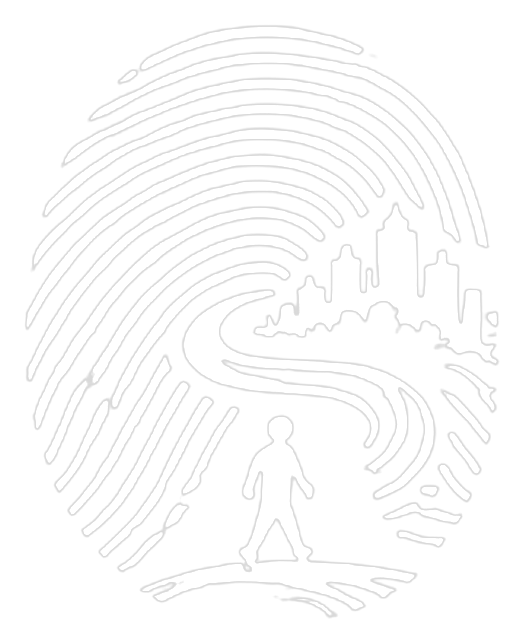
What the OLMVO Logo Represents
Fingerprint
Every person has their own identity, preferences, strengths, and path.
Path
The path represents movement, choice, learning, and the fact that progress does not have to look the same for everyone.
Person
The person represents the Member moving forward on their own journey.
City / Community
The skyline represents ordinary community life — places to go, people to meet, things to try, and opportunities to belong.
The OLMVO mark represents one person, one path, and a larger community full of possibility.
Our Mission
OLMVO creates accessible, community-based opportunities for adults with disabilities to build connection, confidence, skills, and greater independence through experiences they choose.
Our Vision
A world where disability does not mean being disconnected from community, opportunity, experience, or choice.
What We Believe
CHOICE
People should have meaningful control over their own experiences.
DIGNITY
Support should respect adulthood, individuality, privacy, and self-direction.
ACCESSIBILITY
Access should be built in, not added as an afterthought.
COMMUNITY
People belong in ordinary community life.
TRUST
Safety, boundaries, transparency, and accountability matter.
GROWTH
Support should create possibilities for greater confidence, skill, connection, and independence.
Safety & Trust
OLMVO Community Partners are screened adults who support Members within defined program boundaries. Experiences happen in approved public or community settings. Members can report a concern at any time, and OLMVO maintains clear boundaries between community support and clinical, medical, or emergency services.
What OLMVO Is Not
- Emergency services
- Medical care
- Therapy
- Crisis treatment
- Home care
- Personal care
- 24/7 monitoring
- Transportation service
- A dating service
OLMVO Community Partners provide non-clinical community support within defined program boundaries.
Starting in Metro Atlanta
OLMVO is beginning with a controlled Metro Atlanta pilot so we can learn carefully, listen to Members and Community Partners, strengthen accessibility and safety, and improve the model before expanding.
Why I Built OLMVO
OLMVO was created from a belief that support should help people participate more fully in everyday life — with choice, dignity, accessibility, and opportunities to grow.
Frequently Asked Questions
- What is an OLMVO Experience?
- An OLMVO Experience is a real-world community activity chosen by the Member. It might mean trying a new coffee shop, learning a transit route, visiting a museum, exploring a college campus, practicing a skill, attending a community event, or simply becoming more comfortable doing something new.
- Who are Community Partners?
- Community Partners are screened adults who support Members during OLMVO Experiences. They are not assigned as friends, therapists, or caregivers. Their role is to help make community participation easier, more comfortable, and more possible while respecting the Member's choices, boundaries, and independence.
- Is OLMVO therapy?
- No. OLMVO is not therapy, medical care, crisis treatment, or any kind of clinical service. OLMVO Community Partners provide non-clinical community support within defined program boundaries.
- Does OLMVO provide transportation?
- No. OLMVO is not a transportation service. Members and their support networks arrange their own transportation to and from Experiences.
- Does OLMVO require a specific diagnosis?
- No. A person does not have to fit one particular disability category to belong at OLMVO. OLMVO is built around the person — not a diagnosis. People do not have to disclose a diagnosis to participate or to use accessibility features.
- Can families participate?
- OLMVO is designed around the adult Member's choices and self-direction. Family supporters may be part of the Member's support network, but the Member remains at the center of every decision.
- How does OLMVO approach accessibility?
- Accessibility is part of how OLMVO is built, not an extra feature. OLMVO includes options for screen-reader support, keyboard navigation, Read Aloud, Speak My Answer, larger text, higher contrast, reduced motion, larger controls, and accessibility preferences. People should not have to disclose a diagnosis to use accessibility features.
- What happens if I have a concern?
- OLMVO takes concerns seriously. You can report a concern through the Report a Concern page, and the OLMVO team will review it. If you have an emergency, contact emergency services directly.
- Where is OLMVO currently available?
- OLMVO is currently available through a controlled Metro Atlanta pilot. We have not announced expansion dates yet.